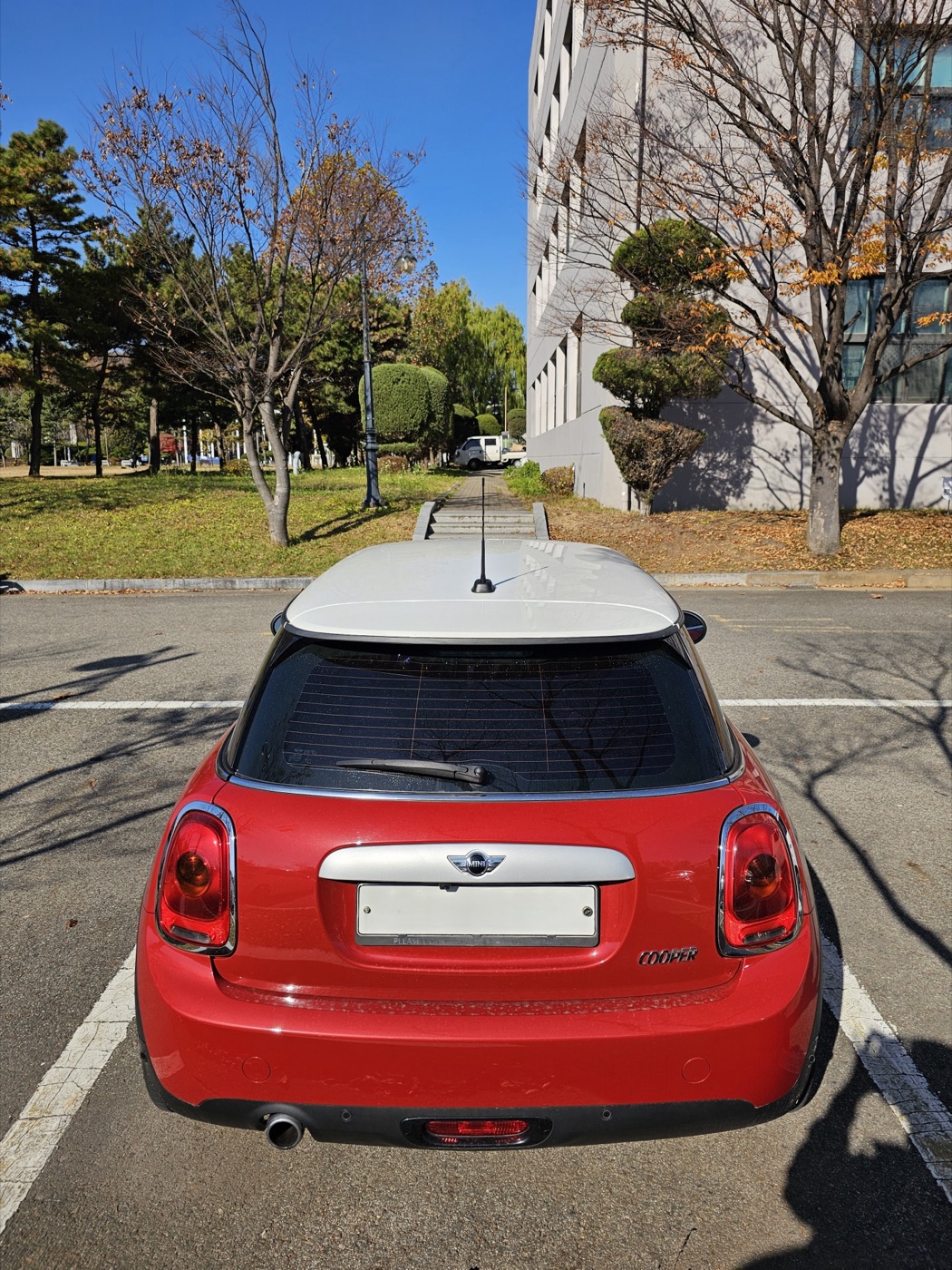
Buying Guide / R50 - F56
Mini Cooper Problems & Buying Guide
Retro styling meets go-kart handling. The modern Mini has been built by BMW since 2001, with the Cooper S and JCW delivering genuine performance in a compact package.
Retro styling meets go-kart handling. The modern Mini has been built by BMW since 2001, with the Cooper S and JCW delivering genuine performance in a compact package.
The modern Mini is one of the UK's most recognisable cars, and used examples start from as little as £2,000. But generation and engine code make an enormous difference to what you can expect from ownership.
With 154,527 used sales in 2025, the Mini was the sixth most popular used car in the UK. Brand loyalty is exceptionally strong, and the Mini's compact dimensions make it a natural fit for urban driving. Insurance varies wildly across the range: a standard Cooper sits in group 11, while the JCW can reach group 34, so running costs depend heavily on which variant you choose.
We've compiled 34 known issues for the Mini Cooper in our database. Here are the five that matter most, drawn from specialist workshops, owner forums and independent automotive sources.
Go deeper: Run a free Get Car Wise report on a specific Mini to see which issues apply to that exact car, plus full MOT history, mileage checks and a personalised buyer checklist.
See every franchised dealer visit, dates, mileage readings, and work done before you buy.
£6.99 · Full refund if no records found
R50/R53 (2001-2006) - The first BMW-era Mini revived a British icon with modern engineering. The base R50 Cooper used a Chrysler-sourced Tritec 1.6-litre naturally aspirated engine, while the R53 Cooper S featured a supercharged version of the same unit producing 163bhp. The supercharged R53 remains a favourite among enthusiasts for its linear power delivery and mechanical simplicity compared to later turbocharged models. The supercharger is generally robust, though the intercooler spray jet system can clog and the supercharger oil requires periodic changing. Common issues on the first generation include power steering pump failures, water pump leaks and electrical gremlins related to the body control module. Build quality was sometimes inconsistent, with interior trim rattles and exterior panel gaps reported across the range. The R50/R53 is now old enough that condition varies enormously, and careful inspection is essential.
R56 (2006-2013) - The second generation Mini brought a controversial change: the switch from supercharging to turbocharging and from the Tritec engine to a PSA/BMW co-developed unit. The early R56 Cooper S (2007-2010) used the N14 1.6-litre turbo engine, which has become one of the most discussed engines in modern car ownership due to its timing chain tensioner failures. The N14 is the single biggest risk factor when buying a used Mini, and the engine code is the first thing any specialist will check. From 2011, BMW revised the engine to the N18 specification, which addressed the chain tensioner design and significantly reduced the failure rate. The naturally aspirated Cooper and Cooper D models used different engines and do not share the N14's specific timing chain risk, though they have their own issues with cooling systems and clutch wear. The R56 also introduced the Clubman estate variant (R55) and the larger Countryman crossover (R60).
F56 (2014-present) - The third generation Mini is a substantially larger and more refined car than its predecessors. BMW moved to its own engine family (B38 three-cylinder and B48 four-cylinder), leaving the PSA partnership behind. The F56 is wider, longer and heavier than the R56, which improves practicality and crash safety but changes the driving character. The go-kart feel is still present, but the F56 is a more comfortable and composed car than earlier Minis. Build quality improved significantly, and the interior feels more premium than the R56. Common issues are fewer and less severe on the F56, though the B38 three-cylinder can suffer from coolant loss and thermostat issues, and the dual-clutch automatic gearbox may exhibit juddering at low speeds on early models. Post-2018 facelifted models (known as the F56 LCI) refined the engine calibration and infotainment further. The F56 Cooper S with the B48 engine offers strong performance with a better maintenance outlook than the N14-powered R56 it replaced.
The N14 engine fitted to 2007-2010 R56 Cooper S and JCW models has a timing chain tensioner that may fail. When the chain stretches beyond the tensioner's ability to compensate, it can skip teeth or snap entirely, destroying the engine internally. The pistons strike the valves, bending them and typically causing damage to the piston crowns and cylinder head as well. In most cases, this means a complete engine replacement rather than a repair.
BMW addressed this with the revised N18 engine from 2011, which uses reinforced metal tensioner components in place of the N14's plastic-bodied parts. The N14-to-N18 changeover is the single most important checkpoint when buying an R56. Some N14 failures have occurred with little or no warning symptoms, making this a particularly unpredictable risk. The chain may rattle on cold start as an early warning, but some owners have reported failures at motorway speeds with no prior noise.
The cost of replacement varies significantly depending on whether the engine has already suffered internal damage. If the chain is replaced preventatively before failure, the cost is typically £1,500-2,000. If the engine has been damaged, a replacement engine and fitting can reach £3,000-4,000. Given the values of early R56 Cooper S models, this repair can exceed the car's worth. Independent Mini specialists are generally more cost-effective than main dealers for this work.
Confirm the engine code before viewing. N14 (2007-2010) carries the highest risk, N18 (2011+) is significantly better. Listen for rattling on cold start. If buying an N14, ask for documented proof of chain and tensioner replacement and price the car accordingly.
Minis across both the R53 and R56 generations may suffer from cooling system problems. The electric thermostat can fail to open, preventing coolant from circulating through the radiator and causing the engine to overheat. The lower radiator hose may collapse under vacuum due to a faulty non-return valve, and water pump leaks are commonly reported. These issues are not unique to the Mini, as BMW uses similar cooling system designs across several of its models, but the Mini's compact engine bay and tight packaging can make heat management more challenging.
The water pump uses a plastic body that may fail earlier than expected, with reports of failure around 70,000-90,000 miles. When the impeller cracks or the pump seal leaks, coolant is lost gradually and the engine may overheat during sustained driving. Severe overheating can crack the cylinder head, turning a relatively simple cooling fault into a major repair that may cost more than the car is worth on older models.
On the R56, the thermostat housing is a known failure point. The electronic thermostat can also fail in the closed position, which causes rapid overheating that may not be immediately obvious to the driver if they are not watching the temperature gauge. Some owners fit aftermarket temperature gauges or warning systems to provide earlier notification. Regular coolant system maintenance, including visual inspection of hoses, the expansion tank and coolant level, can help catch developing issues before they cause engine damage.
Watch the temperature gauge carefully during the test drive, including in traffic. Check for coolant stains around the water pump and thermostat housing. Ask if the water pump has been replaced. Inspect the coolant expansion tank for discolouration or cracks.
Clutch failure has been reported as early as 20,000 miles on first and second generation Minis. The combination of a relatively heavy car for its size, turbo torque on Cooper S models, and the urban stop-start driving that many Minis see puts significant strain on the clutch assembly. The dual-mass flywheel fitted to many models adds to the replacement cost, as it is often recommended to replace this at the same time as the clutch if it shows signs of wear.
This is not universal, but it appears frequently enough in owner reports and specialist workshop feedback to warrant checking on any used Mini with a manual gearbox. Driving style has a significant impact on clutch life. Minis used predominantly in city traffic, particularly in hilly areas, may wear clutches faster than those used for motorway commuting. Previous owner driving habits cannot be verified from service records, so a physical check of the clutch condition is important.
The clutch bite point is the most useful indicator. A clutch that engages very high in the pedal travel is nearing the end of its life. Judder when pulling away gently in first gear can indicate a worn or contaminated friction plate. On Cooper S models, the higher torque output accelerates clutch wear, so the issue is more prevalent on these variants. Some owners have fitted uprated clutch kits to extend the replacement interval, though this changes the pedal feel and may not be to all tastes.
Test the clutch bite point. If it engages very high (near the top of pedal travel), the clutch is likely worn. Check for judder when pulling away gently in first gear. Ask about clutch replacement history and budget £600-1,000 if it may be needed.
The electric power steering pump on first and second generation Minis tends to fail around 60,000-80,000 miles. Steering becomes progressively heavier, particularly at low speeds and when parking. In some cases, the power steering may cut out entirely, leaving the driver with unassisted steering. The electric pump motor draws significant current, and the power steering fuse can also blow as a related failure.
This is more than an inconvenience. Without power assistance, the Mini's steering is notably heavy at parking speeds, which may make the car difficult to manoeuvre safely in tight spaces. At higher speeds, the loss of assistance is less noticeable, but the sudden change in steering weight can be unsettling if it happens unexpectedly during driving. The power steering pump is mounted in the engine bay and is exposed to heat and vibration, which contributes to its failure over time.
Replacement involves fitting a new or refurbished pump unit, which typically costs £400-800 including labour at an independent specialist. Refurbished units are available at lower cost and are a common choice for owners of older Minis where the outlay for a new OEM pump is harder to justify. After replacement, the steering system may need calibrating using diagnostic software. The F56 generation uses a different electric steering system that is less prone to this specific failure.
Test steering weight at low speed and when parking. Full-lock turns in both directions should feel smooth and consistent. Listen for any whining noise from the steering system. Check the MOT history for power steering advisories.
Direct injection turbo Minis (Cooper S and JCW) may suffer from carbon buildup on the intake valves. Because fuel is injected directly into the cylinder rather than across the intake valves, carbon deposits accumulate over time, causing rough running, misfires and reduced power. This is a characteristic of all direct injection engines, not just the Mini, but the high specific output of the Cooper S and JCW engines means the effects can be more noticeable.
High oil consumption is also reported on these engines, with some owners topping up as frequently as every 1,000 miles. While some oil consumption on a turbocharged engine is normal, excessive consumption may indicate worn valve stem seals or piston ring wear. BMW considers up to 1 litre per 1,000 miles as within specification on some engines, which many owners find higher than expected. Regular oil level checks are essential, as running the engine low on oil accelerates wear on the turbocharger bearings and engine internals.
The most common solution for carbon buildup is walnut blasting, where crushed walnut shells are blasted through the intake ports to remove carbon deposits from the backs of the intake valves. This is an effective treatment but needs repeating every 30,000-50,000 miles depending on driving style and conditions. Short urban journeys and frequent cold starts tend to accelerate carbon buildup, while sustained motorway driving helps keep deposits in check. Some owners use catch cans to reduce oil vapour re-entering the intake system, though this is an aftermarket modification.
Check the oil level before and after the test drive. Ask the owner about oil consumption between services. Rough idle and hesitation under load may indicate carbon buildup. Walnut blasting removes deposits but is a recurring maintenance cost to factor in.
The Mini Cooper is genuinely fun to drive. The go-kart handling is not just marketing; the chassis is agile, the steering is communicative, and the Cooper S delivers enough performance to put a smile on your face. The brand holds its value well, too.
The critical decision is which generation to buy. The 2007-2010 R56 with the N14 engine carries significant timing chain risk and is best avoided unless priced accordingly and with documented chain replacement. The N18 engine (2011 onwards) addressed the worst of the N14's weaknesses.
For the lowest-risk used buy, the F56 generation (2014 onwards) is the safest bet, particularly post-2016 models with a full service history. Budget for specialist maintenance costs and check the specific issues above before committing.
Get Car Wise is not just another vehicle check service. We maintain a database of known mechanical issues for every popular car on UK roads, tracking the actual faults that owners and specialists report.
When you run a Get Car Wise report on a specific Mini Cooper, we cross-reference the exact variant, engine and age against our database of 34 known Mini Cooper issues. Combined with full MOT history analysis, mileage verification and DVLA data, you get a complete picture before viewing.
Every report includes a personalised buying checklist tailored to that specific vehicle. It takes 30 seconds to run and the free report covers the essentials.
See current market data, average prices by variant, and get a free valuation for any Mini Cooper.
Mini Cooper Value Estimate →