Buying Guide
Ford Fiesta Problems & Buying Guide
The UK's best-selling car for over a decade. Production ended in 2023, making used examples the only option. Here are the problems every buyer should check for.
The UK's best-selling car for over a decade. Production ended in 2023, making used examples the only option. Here are the problems every buyer should check for.
The Ford Fiesta was the UK's best-selling car for much of the last two decades. With production ending in July 2023, the used market is the only route to ownership. The Mk7 (2008-2017) and Mk8 (2017-2023) are the most common on the used market.
We track 38 known issues across the Fiesta range. While many Fiestas give years of trouble-free use, certain engine and gearbox combinations carry significantly higher risk than others. Knowing which to target and which to approach with caution can save thousands.
Go deeper: These are just the highlights. Run a free Get Car Wise report on a specific Ford Fiesta to see which of our 38 known issues apply to that exact car, plus full MOT history analysis, mileage checks and a personalised buyer checklist.
See every franchised dealer visit, dates, mileage readings, and work done before you buy.
£6.99 · Full refund if no records found
The Fiesta nameplate dates back to 1976, but the cars most buyers are looking at today fall into two generations: the Mk7 (2008-2017) and the Mk8 (2017-2023). Understanding the differences between them, and between the various facelifts within each generation, is essential for making a well-informed purchase.
Mk7 (2008-2017): The seventh-generation Fiesta was a landmark car for Ford. It introduced a sharp, modern design that aged well, a range of efficient engines, and handling that consistently topped comparison tests in the supermini class. The Mk7 was the UK's best-selling car for 12 consecutive years, a record that speaks to its broad appeal across demographics. Engine options ranged from the basic 1.25 and 1.4 Duratec petrols to the later 1.0 EcoBoost three-cylinder turbo, which won the International Engine of the Year award three years running. Diesel buyers could choose between 1.4 and 1.6 TDCi units. The Mk7 platform also spawned the much-loved Fiesta ST in 2013, which used a 1.6 EcoBoost producing 180bhp and quickly became one of the most celebrated hot hatches of its era.
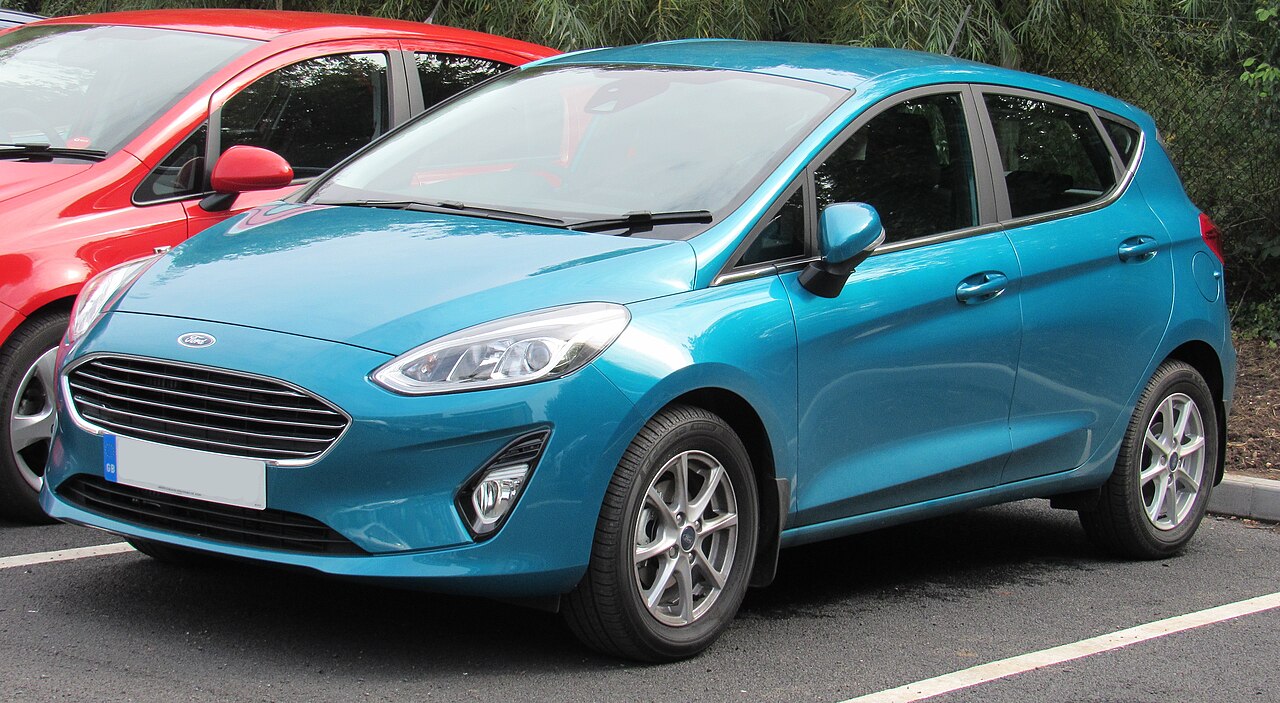
Mk7.5 facelift (2013): Ford gave the Mk7 a significant mid-life update in 2013. The exterior received a new front end with the Aston Martin-inspired grille, updated headlights and revised tail lamps. Inside, the dashboard was modernised with Ford's SYNC infotainment system and improved materials. Mechanically, the 1.0 EcoBoost engine became the core of the range, offered in 80, 100 and 125bhp versions. If you are looking at Mk7 Fiestas, the post-2013 facelift models generally offer a more refined experience, better interior quality and more modern connectivity.
Mk8 (2017-2023): The eighth and final generation Fiesta was a substantial step forward. It grew slightly in every dimension, gained a more upmarket interior with Ford's SYNC 3 touchscreen, and introduced active safety features like autonomous emergency braking, lane keeping assist and adaptive cruise control on higher trim levels. Engine options were streamlined around the 1.0 EcoBoost (now available in 100, 125 and 140bhp forms), with the 1.5 TDCi diesel for those covering higher mileages. The Mk8 also saw the introduction of the Fiesta ST with a 1.5 three-cylinder EcoBoost producing 200bhp, and the mild hybrid (mHEV) version of the 1.0 EcoBoost with a 48-volt belt-integrated starter-generator.
End of production (July 2023): Ford ceased Fiesta production at its Cologne plant in July 2023, ending a 47-year production run. The decision was driven by Ford's strategic pivot towards electric vehicles and crossovers. This means every Fiesta on the market today is a used car, and values on low-mileage, well-specified examples have begun to stabilise as buyers recognise that supply is finite.
On the used market, Mk7 examples from 2012-2017 represent the largest pool of available cars. They combine relatively modern features with lower purchase prices, typically starting from around £3,000 for higher-mileage examples. The Mk8 commands a premium, with prices starting from around £8,000 for early examples, but brings notably better technology and safety equipment. For first-time buyers and those on tighter budgets, the Mk7.5 facelift (2013-2017) often represents the sweet spot between value and specification.
The 1.0 EcoBoost engine uses an oil-immersed timing belt (known as a "wet belt") instead of a conventional external belt or chain. When this belt degrades, fragments can block the oil pickup, leading to oil starvation and potential engine destruction. This affects all 1.0 EcoBoost Fiestas built before December 2019, across both the Mk7 (from 2012) and early Mk8 (2017-2019) generations. The 80, 100, 125 and 140bhp versions are all affected.
Ford acknowledged the problem and extended the warranty to 8 years or 80,000 miles. From December 2019 onwards, Ford switched to a timing chain on the 1.0 EcoBoost, eliminating this issue on newer cars. For affected engines, Ford recommended replacement of the wet belt at intervals no longer than 10 years or 150,000 miles, but many specialists advise replacement much sooner, particularly if oil change intervals have not been strictly observed.
The symptoms of an impending wet belt failure can be subtle. You may hear a faint rattling or ticking from the engine on cold starts, or notice small flakes of belt material in the oil during a service. In some cases, the first sign of trouble is a sudden loss of oil pressure, at which point significant internal damage may already have occurred. A preventative belt replacement typically costs between £500 and £800 at a specialist, while a full engine rebuild or replacement after a failure can exceed £3,000. MOT history will not directly flag this issue, but a pattern of missed or irregular services should raise concerns about whether the belt has been properly maintained.
Confirm whether the wet belt has been replaced and check the build date. Post-December 2019 cars use a chain and are not affected. For older cars, ask for evidence that the belt has been replaced or check whether Ford's extended warranty still applies. Request service records showing oil changes at the correct intervals, as degraded oil accelerates belt wear.
Ford's Powershift dual-clutch automatic gearbox has a well-documented history of problems. The Powershift was offered on Mk7 Fiestas paired with the 1.0 EcoBoost, 1.25 and 1.4 petrol engines, as well as the 1.6 TDCi diesel. The issue centres on the dual dry-clutch assembly, which can wear prematurely, though wet-clutch variants fitted to higher-torque applications also suffer. Ford's then-CEO publicly acknowledged issues with the Powershift transmission, and the company faced class-action lawsuits in multiple countries.
Symptoms typically begin as a shudder or vibration when pulling away from a standstill, particularly in first and second gear. As the problem worsens, drivers may experience hesitation, jerky gear changes, grinding noises, and in severe cases complete loss of drive. The issue tends to be most noticeable in stop-start urban driving and when the gearbox is cold. Some owners report the car "kangarooing" at low speeds or rolling backwards momentarily on hill starts.
Repair costs can be significant. A clutch pack replacement typically costs upwards of £1,500 at a specialist, while a full gearbox replacement or remanufactured unit can reach £3,500. Software updates from Ford can sometimes improve shift quality temporarily, but they do not address the underlying mechanical wear. On the used market, Powershift-equipped Fiestas tend to sell for less than their manual equivalents, which reflects the perceived risk. If you are set on an automatic Fiesta, the Mk8 offered a conventional torque converter automatic on some variants, which does not share these issues.
Test drive at low speeds in stop-start traffic. Feel for juddering, hesitation or clunking when moving off from a standstill. Check whether the gearbox oil has been changed at regular intervals. Try hill starts and reversing manoeuvres. If in doubt, consider choosing a manual gearbox instead.
Steering rack wear and track rod end deterioration are common MOT advisory and failure items on Fiestas with higher mileage. This affects both Mk7 and Mk8 models, though it is most prevalent on Mk7 examples that have covered 60,000 miles or more. The electric power steering system on the Fiesta is generally robust, but the mechanical components of the steering rack and its associated track rod ends are subject to normal wear, which is accelerated by poor road surfaces and pothole damage.
Symptoms include vague steering feel, a noticeable "dead spot" around the straight-ahead position, knocking or clunking noises when turning at low speeds, and uneven tyre wear on the front axle. In more advanced cases, the steering may feel noticeably looser than expected, or the car may wander slightly on the motorway. These symptoms tend to develop gradually, so a current owner may not notice the deterioration.
Track rod ends are a relatively inexpensive fix at around £100-200 per side including a wheel alignment, but a full steering rack replacement can reach £400-600 including labour at an independent garage. When reviewing MOT history, look specifically for advisories mentioning "steering rack inner joint," "track rod end ball joint," or "excessive free play in steering." A pattern of these advisories across consecutive MOTs suggests ongoing wear that may need addressing. This is one of the most common MOT failure points on the Fiesta and is worth factoring into your budget.
During the test drive, feel for any play or vagueness in the steering, particularly at low speeds and when parking. Listen for knocking when turning lock to lock. Check the MOT history for steering-related advisories across multiple tests, which may indicate progressive wear that needs attention.
Water ingress through door seals is a recurring complaint on the Fiesta, particularly around the driver's footwell and boot area. This affects both Mk7 and Mk8 models, though the three-door Mk7 is the most commonly reported. The problem stems from degraded or poorly seated door seals, blocked drain channels in the doors, and in some cases failed windscreen bonding that allows water to track down behind the dashboard.
The consequences of undetected water ingress go well beyond damp carpets. Prolonged exposure to moisture can corrode the wiring loom that runs beneath the front footwells, leading to intermittent electrical faults, malfunctioning central locking, and in severe cases dashboard warning lights or BCM (body control module) failures. Water pooling in the boot area can also cause corrosion to the boot floor and spare wheel well. The musty smell associated with damp interiors can be very difficult to eliminate once it takes hold.
The door seals themselves are inexpensive, typically £20-50 per seal from Ford, and straightforward to fit. However, if water ingress has gone undetected for an extended period, the secondary damage to electrics and bodywork can cost significantly more to rectify. Replacement of a corroded wiring loom section can run to £200-500 depending on the extent. On the MOT, inspectors may note corrosion to the inner sills or floor sections that has been caused or accelerated by water leaks, so check the MOT history for any bodywork-related advisories.
Lift the carpets and check the footwells for dampness, particularly on the driver's side. Inspect the boot area for water staining or a tide mark. Check the condition of the door seals visually and feel for any gaps, hardening or deterioration. Smell inside the car with the windows closed and the heating off; a musty or damp odour is a strong indicator.
The 1.25 and 1.4 Duratec petrol engines on the Mk7 Fiesta can suffer from electronic throttle body failures. These naturally aspirated engines were the entry-level options in the Fiesta range from 2008 to around 2016, when they were gradually phased out in favour of the 1.0 EcoBoost. The issue stems from the electronic throttle body unit, which controls airflow into the engine via a motorised butterfly valve rather than a traditional cable-operated system. Over time, carbon deposits build up on the butterfly valve and bore, and the internal motor or position sensor can fail.
Symptoms include an engine management warning light (often accompanied by a wrench icon on the dashboard), intermittent loss of power, erratic idle speed that fluctuates between 500 and 1,500rpm, and in some cases the car entering "limp mode" where engine output is severely restricted. The problem often manifests intermittently at first, clearing itself after restarting the engine, before becoming more persistent. Cold starts and damp weather can trigger or worsen the symptoms.
A replacement throttle body typically costs £200-500 fitted at an independent garage. Genuine Ford parts sit at the higher end of that range, while aftermarket alternatives are available from around £100 for the part alone. The issue is particularly common on examples that have covered 70,000 miles or more, and those used predominantly for short urban journeys where carbon deposits accumulate faster. A throttle body clean can sometimes resolve the issue temporarily for £50-80, but replacement is usually the longer-term fix. On the MOT, a stored engine management fault code may cause a failure, so check the MOT history for emissions test failures or advisories mentioning "engine malfunction indicator lamp."
Watch for the engine management light during the test drive, especially after the engine has warmed up. Pay attention to idle quality, throttle response and any hesitation when pulling away. Any surging or hunting at idle may indicate a failing throttle body. Check the MOT history for emissions-related failures, which can be a secondary symptom.
The Ford Fiesta remains one of the most practical and affordable small cars on the UK used market. However, the choice of engine and gearbox has a significant impact on the ownership experience.
A manual gearbox with the 1.0 EcoBoost engine (post-December 2019, with the timing chain) or a naturally aspirated petrol (1.25 or 1.4, with throttle body checked) may be the lower-risk combinations. The Powershift automatic gearbox carries the highest risk of an expensive repair.
As with any used car, a professional inspection before purchase is strongly recommended.
See current market data, average prices by variant, and get a free valuation for any Ford Fiesta.
Ford Fiesta Value Estimate →Get Car Wise isn't just another vehicle check service. We maintain a database of known mechanical issues for every popular car on UK roads, not just standard history checks, but the actual faults that owners and specialists report.
When you run a Get Car Wise report on a specific Ford Fiesta, we cross-reference the exact variant, engine and age against our database of 38 known Fiesta issues. Combined with full MOT history analysis, mileage verification and DVLA data, you get a complete picture of what to expect before you view the car.
Every report includes a personalised buying checklist tailored to that specific vehicle, highlighting the issues most relevant to its age, mileage and specification. It takes 30 seconds to run and the free report covers the essentials.