Buying Guide
Volkswagen Golf Problems & Buying Guide
One of Britain's best-selling hatchbacks since 1974. Now in its eighth generation, the Golf covers everything from frugal commuters to the GTI and R.
One of Britain's best-selling hatchbacks since 1974. Now in its eighth generation, the Golf covers everything from frugal commuters to the GTI and R.
The Volkswagen Golf is one of the UK's most popular used cars, with hundreds of thousands on the road spanning five decades. Its blend of practicality, build quality and wide engine range makes it a common choice for everything from first cars to daily drivers.
According to SMMT data, there were 226,082 used Golf transactions in 2025, making it the third most popular used car in the UK. That volume means strong parts availability and a healthy supply of cars to choose from, but it also means buyers need to be selective. Not all Golfs are created equal, and the generation, engine and gearbox combination you choose can make a significant difference to ownership costs.
We've compiled 91 known issues for the Golf range in our database. Here are the five that matter most, drawn from data by VW specialists and owner communities across the UK.
Go deeper: Run a free Get Car Wise report on a specific Golf to see which issues apply to that exact car, plus full MOT history, mileage checks and a personalised buyer checklist.
See every franchised dealer visit, dates, mileage readings, and work done before you buy.
£6.99 · Full refund if no records found
The Golf has been on sale in the UK since 1974 and is now in its eighth generation. Each new version has built on the last, but some generations stand out as better used buys than others. Here is what you need to know about each one still commonly found on the used market.
Mk4 (1997 to 2003) - The Mk4 was the generation where VW repositioned the Golf as a more premium product. Interior quality took a notable step forward, with soft-touch plastics and a more refined cabin than its predecessor. The Mk4 introduced the VR6 engine to a wider audience and, towards the end of its life, the first Golf R32 arrived with a 3.2-litre V6 and four-wheel drive. The R32 has since become a sought-after modern classic. Standard Mk4s are now ageing, and most survivors will have high mileage. Rust is a concern on this generation, particularly around the wheel arches, sills and boot floor. Parts are still widely available, but mechanical condition varies greatly at this age.
Mk5 (2003 to 2008) - The Mk5 represented a significant quality leap. Build quality, ride comfort and refinement all improved substantially. Crucially, the Mk5 brought the Golf GTI back to form after the somewhat forgettable Mk4 GTI. The 2.0 TFSI engine with 197bhp made the Mk5 GTI one of the best hot hatches of its era. The Mk5 R32 also arrived with a 250bhp VR6 and optional DSG gearbox. On the standard car, the 1.9 TDI diesel was a popular workhorse for high-mileage drivers. These cars are now well into the budget end of the market, and condition varies widely. A full service history is particularly important at this age.
Mk6 (2008 to 2012) - The Mk6 was an evolution of the Mk5 rather than a clean-sheet redesign, sharing much of its platform and many components. VW refined the interior, improved sound insulation and added more standard equipment. The Mk6 was one of the best-selling Golf generations in the UK and remains a common sight on the used market. The GTI continued with the 2.0 TSI engine, and the Golf R replaced the R32 with a turbocharged 2.0-litre four-cylinder producing 270bhp. The Mk6 is a solid used buy, though it shares the timing chain and DSG concerns covered in the issues section below.
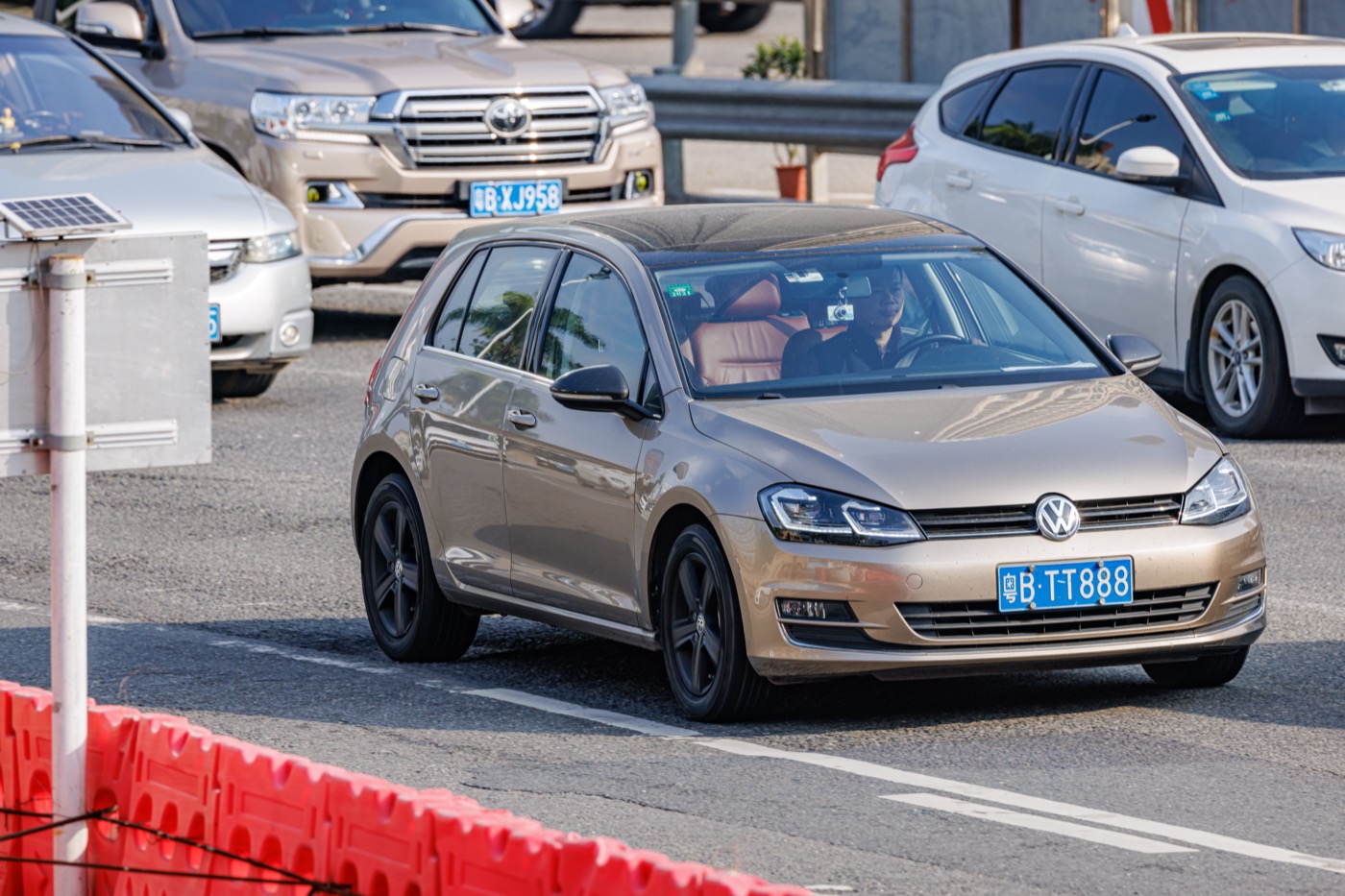
Mk7 (2012 to 2019) - Widely considered the peak of the Golf range by many owners and motoring journalists. The Mk7 moved to VW's MQB platform, shedding up to 100kg compared to the Mk6 while gaining interior space. The result was a car that felt lighter, more agile and more refined than any previous Golf. Interior quality reached a high point, with a clean dashboard design and excellent materials. The revised 1.4 TSI (and later 1.5 TSI) engines addressed many of the earlier timing chain concerns. The Mk7 GTI with its 220bhp (or 230bhp Performance Pack) is widely regarded as one of the best all-round hot hatches ever made. The Golf R grew to 300bhp and offered genuine sports car performance. If budget allows, the Mk7 is the generation most buyers should target.
Mk7.5 (2017 to 2019) - The Mk7.5 was a mid-life facelift of the Mk7, bringing revised LED headlights, new bumper designs, updated infotainment with gesture control, and an optional digital cockpit (Active Info Display). Mechanically, the 1.5 TSI with cylinder deactivation replaced the 1.4 TSI. The Mk7.5 GTI received a minor power bump and a refreshed interior. For buyers who want the best of the Mk7 platform without the Mk8's touchscreen-heavy approach, the Mk7.5 represents a strong option.
Mk8 (2019 onwards) - The current Golf generation divided opinion from launch. VW replaced most physical buttons with a large touchscreen and capacitive touch sliders for volume and temperature. Early models were plagued by software glitches (covered in detail below). The Mk8 GTI produces 245bhp and the Golf R makes 320bhp, both strong numbers. However, the interior ergonomics and infotainment system remain a common complaint even on later production cars. VW has issued multiple software updates, and 2022-onwards cars are reported to be more stable. The Mk8 may suit buyers who prioritise the latest technology, but those who prefer physical controls and proven software should consider the Mk7.5 instead.
The Golf's position as a UK fleet favourite has also kept used values strong. Company car drivers stepping out of lease vehicles feed a steady supply of well-specified, relatively low-mileage cars onto the used market. The GTI, meanwhile, has been the definitive hot hatch since 1976, and strong variants like the Mk5 GTI, Mk7 GTI and Clubsport continue to hold their value well.
The 7-speed DQ200 dry-clutch DSG fitted to lower-powered petrol Golfs (1.2, 1.4 TSI) is the most problematic gearbox in the Golf range. It may suffer from juddering at low speed, hesitation when pulling away, harsh gear changes and complete mechatronic unit failure. The mechatronic unit is an electro-hydraulic control module inside the gearbox that manages gear selection, and when it fails the gearbox may refuse to engage gears, get stuck in one gear, or display warning lights on the dashboard. This issue affects Mk5, Mk6 and early Mk7 cars fitted with the DQ200 unit.
The 6-speed DQ250 wet-clutch unit fitted to higher-powered models (GTI, 2.0 TDI) is generally considered more robust, though not immune to issues. The DQ250 uses a wet clutch pack that runs in oil, providing better cooling and smoother operation. However, it too requires regular fluid changes to maintain longevity. VW extended the warranty on affected DQ200 units in some markets, but most UK cars are now well past any coverage period. A full mechatronic unit replacement can exceed £3,500, and a complete gearbox rebuild may reach £7,500.
The DSG is not inherently a bad gearbox when properly maintained. The core problem is that VW originally marketed it as "sealed for life" with no fluid changes needed, leading many owners and even some dealers to skip the 40,000-mile fluid and filter change that specialists recommend. Cars with documented DSG service history tend to fare better. If you are looking at a DSG-equipped Golf, proof of regular fluid changes is one of the most important things to verify. A manual gearbox avoids this issue entirely and is the lower-risk option.
Test drive in stop-start traffic for at least 15 minutes. Feel for judder or hesitation from standstill in first and second gear. Check for DSG warning lights on the dashboard. Ask for proof of DSG fluid and filter changes (recommended every 40,000 miles). Listen for clunking or whining noises during gear changes. Try reversing slowly and then pulling away forwards to test the clutch engagement at its most vulnerable point.
Early 1.2 TSI and 1.4 TSI engines (EA111 family) used a timing chain and tensioner mounted at the rear of the engine, near the flywheel. Over time, the chain may stretch and the original tensioner design may fail to maintain adequate tension. When the chain stretches beyond the tensioner's range, the engine timing slips. In the worst cases this causes the valves to contact the pistons, destroying the engine internally. This is not a gradual failure that gives you weeks of warning. It can go from "slight rattle on cold start" to "engine destroyed" within days or even on a single journey.
The issue primarily affects Mk5 and Mk6 Golfs (2003 to 2012) and very early Mk7s built before VW revised the tensioner around 2013. The EA111 engine family was fitted across a huge number of VW Group cars (Polo, Golf, Scirocco, Audi A1, SEAT Leon, Skoda Octavia), so this is one of the most widely documented faults in modern VW ownership. VW revised the tensioner design and chain specification from approximately 2013, and post-revision EA211 engines moved the chain to the front of the engine where it is more accessible. Post-2013 cars are considered lower risk, though the issue has not been entirely eliminated on all variants.
The repair on pre-2013 cars is particularly expensive because the chain sits at the flywheel end of the engine. Accessing it requires removing or dropping the gearbox, which adds significant labour time. At an independent specialist, expect to pay between £1,000 and £1,500 for the chain, tensioner and guides to be replaced. If the timing has already slipped and caused valve or piston damage, the engine may need a full rebuild or replacement, pushing costs to £2,500 or more. For this reason, many specialists recommend proactively replacing the chain and tensioner on any pre-2013 TSI engine that has not already had the work done, regardless of mileage.
Listen carefully for a rattling or chattering noise on cold start, especially in the first few seconds before oil pressure builds. This is often the earliest symptom. Ask if the tensioner has been replaced with the updated part and request documentation. On pre-2013 cars, have a VW specialist inspect the chain condition before purchase. High-mileage cars without tensioner replacement carry elevated risk. Check the MOT history for any engine-related advisories.
The Mk8 Golf (2020 onwards) replaced nearly all physical buttons with a large central touchscreen and capacitive touch sliders for volume and temperature. This was a radical departure from the Mk7's more conventional layout. Early production Mk8s (2020 and 2021 model years) were widely criticised for software glitches including screen freezes, unresponsive touch controls, Bluetooth pairing failures, Apple CarPlay and Android Auto disconnections, and the infotainment system rebooting spontaneously while driving. Some owners reported the system crashing multiple times per journey.
VW has issued multiple over-the-air and dealer-applied software updates to address these problems since launch. Cars produced from 2022 onwards generally run more stable software, and some of the worst early bugs have been resolved. However, owner forums continue to document frustrations with lag, slow boot times and occasional glitches even on updated cars. The fundamental design decision to use capacitive touch sliders (which provide no physical feedback) for volume and temperature remains controversial. Euro NCAP downgraded the Mk8 Golf in its safety assessment partly due to driver distraction concerns caused by the touchscreen-heavy controls.
For buyers considering a Mk8, the software version matters. Ask the seller or dealer which software version is installed and whether all available updates have been applied. Be aware that some features may require a paid subscription after the initial included period expires. If touchscreen ergonomics are a concern, the Mk7.5 (2017 to 2020) offers the same MQB platform and similar engines with a more conventional, physical-button interior that many owners prefer.
Spend at least 10 minutes testing the infotainment system before buying. Check the touchscreen responsiveness across multiple menus. Try pairing a phone via Bluetooth and test Apple CarPlay or Android Auto. Test the capacitive volume and temperature sliders. Try the reversing camera. Ask if all available software updates have been applied. Check that the digital cockpit displays correctly without glitches. If any of these systems feel sluggish or unresponsive, the car may need a dealer software update.
The EA888 engine (fitted to GTI, Golf R and some 1.8/2.0 TSI models across Mk5, Mk6, Mk7 and Mk8 generations) uses a water pump with a plastic impeller that may crack, delaminate or disintegrate over time. When the impeller fails, coolant flow through the engine stops and the engine can overheat rapidly. Overheating, even briefly, can warp the cylinder head, damage the head gasket and cause serious internal engine damage. The thermostat housing on the same engine family is also prone to developing cracks and leaks, particularly around the plastic housing that connects to the coolant pipes.
VW has revised the water pump design multiple times across the production run of the EA888. Earlier versions (Gen 1 and Gen 2) are more commonly affected, but failures have been reported on Gen 3 engines as well. The part itself is relatively inexpensive (around £80 to £150 for the pump), but access varies between engine variants. On some configurations, the labour alone can push the total cost to £400 to £900. Many owners and specialists recommend proactively replacing the water pump and thermostat at around 60,000 to 80,000 miles as preventive maintenance, particularly on GTI and R models that may see harder driving.
A failed water pump does not always give obvious warning signs. The temperature gauge may spike suddenly rather than rising gradually. Some cars may show a coolant warning light, while others may overheat before the driver notices. Coolant loss can also be gradual if the thermostat housing develops a slow leak rather than a sudden failure. Checking the coolant level regularly and inspecting for dried coolant residue around the pump and thermostat area are worthwhile habits for any EA888 owner.
Check the coolant level in the expansion tank and look for any signs of leaks, staining or dried residue around the water pump and thermostat housing area. During a test drive, monitor the temperature gauge closely for any fluctuation or sudden rise. Ask if the water pump has been replaced with the latest revision part. Review the MOT history for any coolant-related advisories or warnings. On higher-mileage cars, ask whether the thermostat has been replaced.
The 2.0 TDI diesel engines across Mk5, Mk6 and Mk7 generations may suffer from EGR (Exhaust Gas Recirculation) valve clogging and DPF (Diesel Particulate Filter) blockages. The EGR valve recirculates a portion of exhaust gas back into the intake to reduce nitrogen oxide emissions, but over time the valve and its passages may become clogged with carbon deposits. This is especially common on cars used primarily for short journeys and urban driving where the engine and exhaust system do not reach full operating temperature regularly. A clogged EGR valve can cause rough idling, loss of power, increased fuel consumption and an engine management warning light.
The DPF traps soot particles from the diesel exhaust and periodically burns them off through a process called regeneration, which requires sustained higher exhaust temperatures. Cars that are driven mainly on short trips may never reach the conditions needed for a successful DPF regeneration. When the DPF becomes blocked, it triggers a warning light and may put the car into limp mode, restricting speed and power. A forced regeneration at a garage may clear a partially blocked DPF, but a fully blocked filter may need replacement at a cost of £1,000 to £2,000 or more. Both the EGR and DPF are MOT-relevant items. A car with excessive emissions or a removed/tampered DPF will fail the MOT.
It is worth noting that the Volkswagen emissions scandal ("Dieselgate") affected many Golf TDI models from 2009 to 2015. VW applied a software fix to affected cars, and some owners have reported changes in performance, fuel economy or DPF behaviour after the fix was applied. While VW has stated the fix should not affect performance, owner opinions vary. If buying a diesel Golf from this era, it is worth checking whether the emissions recall has been applied and asking the seller about their experience with the car since the update.
Check for any engine management warning lights, particularly the DPF light. Review the full MOT history for emissions-related failures or advisories, which may indicate ongoing DPF or EGR problems. Ask about the car's typical usage pattern, as predominantly motorway-driven diesels tend to have fewer DPF issues. A diagnostic scan can reveal EGR valve condition, DPF soot loading percentage and regeneration history. If the car has mainly been used for short urban trips, the DPF may be partially blocked even if no warning light is currently showing.
The Volkswagen Golf remains one of the best all-round hatchbacks on the used market, but the right specification makes a significant difference to ownership experience. A petrol Golf with a manual gearbox avoids the two most expensive potential problems on this list: DSG failure and timing chain stretch.
The Mk7 generation (2013-2020) with the revised 1.4 TSI (or 1.5 TSI from 2017) and a six-speed manual is widely considered the sweet spot for balancing running costs, technology and lower risk. The Mk7.5 facelift (2017-2020) is a safer bet than early Mk8 models, which may still carry infotainment frustrations.
Whichever generation you consider, a full service history, independent pre-purchase inspection and thorough MOT history check are strongly recommended before committing.
Get Car Wise is not just another vehicle check service. We maintain a database of known mechanical issues for every popular car on UK roads, tracking the actual faults that owners and specialists report.
When you run a Get Car Wise report on a specific Volkswagen Golf, we cross-reference the exact variant, engine and age against our database of 91 known Golf issues. Combined with full MOT history analysis, mileage verification and DVLA data, you get a complete picture before viewing.
Every report includes a personalised buying checklist tailored to that specific vehicle. It takes 30 seconds to run and the free report covers the essentials.
See current market data, average prices by variant, and get a free valuation for any Volkswagen Golf.
Volkswagen Golf Value Estimate →