Buying Guide / E46 - G20
BMW 3 Series Problems & Buying Guide
The UK's most popular premium saloon. Praised for rear-wheel drive handling and efficient engines, but some generations carry a mixed reputation.
The UK's most popular premium saloon. Praised for rear-wheel drive handling and efficient engines, but some generations carry a mixed reputation.
The BMW 3 Series has been the default premium compact saloon in the UK for decades. Prices start from around £4,000 for older examples, but engine choice matters enormously when it comes to potential repair bills.
With 157,343 used sales in 2025, the 3 Series was the fifth most popular used car in the UK and the top-selling premium saloon by a considerable margin. Running costs are significantly higher than mainstream rivals like the Ford Mondeo or Vauxhall Insignia, so understanding what can go wrong before you buy is essential.
We've compiled 116 known issues for the 3 Series in our database. Here are the five that matter most, drawn from owner surveys, specialist workshops and enthusiast communities across the UK.
Go deeper: Run a free Get Car Wise report on a specific 3 Series to see which issues apply to that exact car, plus full MOT history, mileage checks and a personalised buyer checklist.
See every franchised dealer visit, dates, mileage readings, and work done before you buy.
£6.99 · Full refund if no records found
E46 (1998-2006) - The E46 is the generation that cemented the 3 Series as the benchmark compact executive car. It is the last of the purely analogue 3 Series models, with hydraulic power steering, naturally aspirated engines and a simplicity that enthusiasts still prize. The E46 M3, powered by the S54 3.2-litre straight-six, remains one of the most celebrated BMW models ever produced. However, the E46 is now over 20 years old, and UK examples are increasingly affected by structural rust, particularly in the rear arches, sills, jacking points and front subframe mounting areas. Corrosion is the single biggest risk on E46 models today, and repair costs can quickly exceed the car's value. The cooling system is also a known weak point across the E46 range, with plastic thermostat housings, expansion tanks and water pump impellers all prone to failure with age and heat cycling.
E90/E91/E92 (2005-2013) - The E90 generation marked a significant shift for the 3 Series. This was the era when BMW moved to turbocharged engines, starting with the N54 twin-turbo straight-six and later the N55 single-turbo. The four-cylinder diesel range introduced the N47 engine, which has become one of the most discussed engines in BMW ownership circles due to its rear-mounted timing chain. The chain's position against the bulkhead makes inspection difficult and replacement extremely labour-intensive. When the chain stretches or the tensioner fails, the consequences are severe. The E90 also introduced electric power steering to the 3 Series for the first time, which some driving enthusiasts regard as less communicative than the E46's hydraulic system. On the positive side, the E90 brought improved safety equipment, better crash protection and a more refined interior. The E92 coupe and E93 convertible share the same platform and mechanical components.
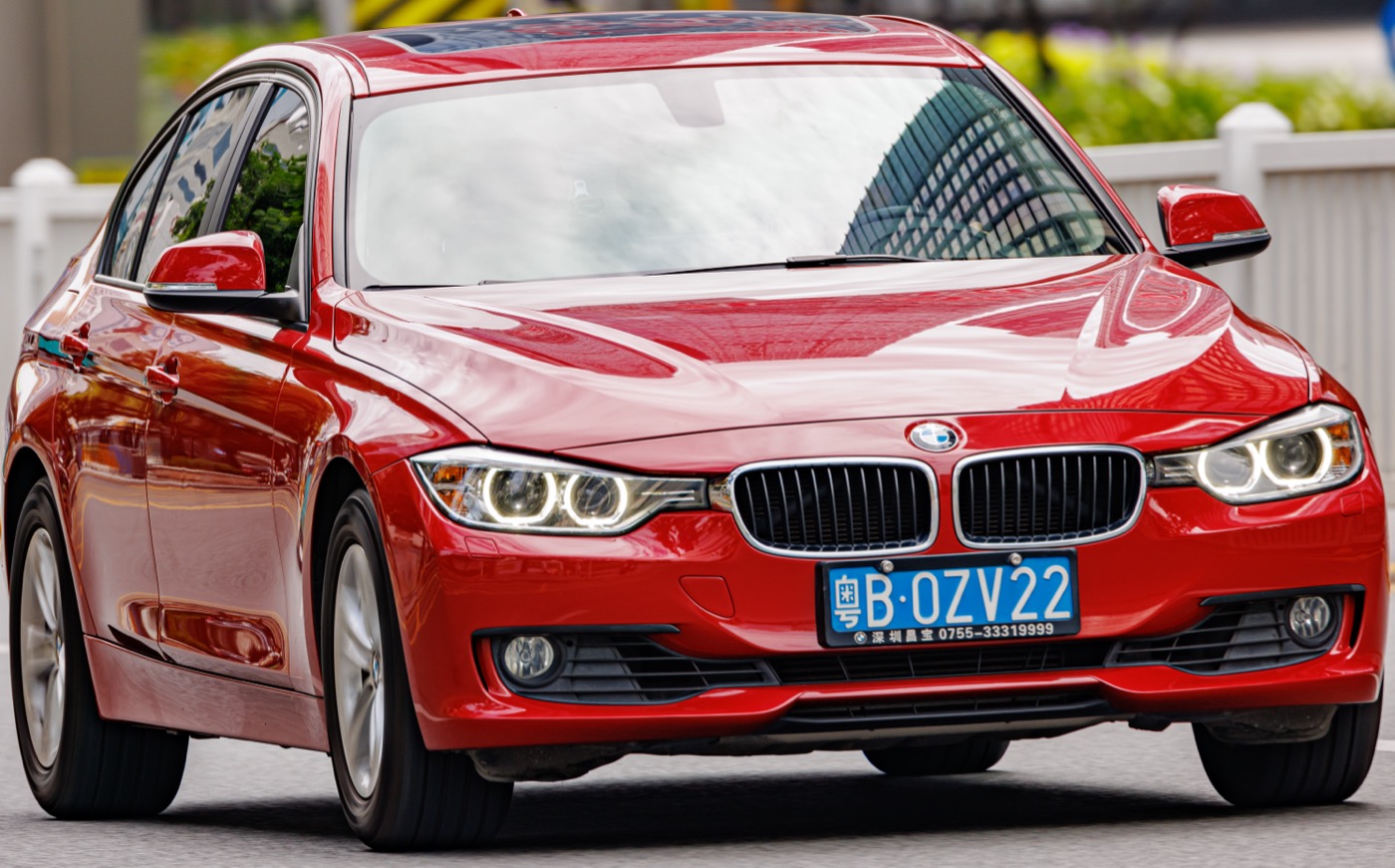
F30/F31 (2012-2019) - The F30 is the most common used 3 Series on the UK market today. BMW focused on weight reduction with this generation, using aluminium in the bonnet, front wings and other panels. The engine range was streamlined to four-cylinder and six-cylinder turbocharged units, with the B48 petrol four-cylinder becoming the most popular choice. The F30 generation brought significant improvements in fuel efficiency, with the 320d returning over 60mpg on paper, though real-world figures are typically lower. The F30 also saw four separate EGR cooler recalls on diesel models, which is an important checkpoint for any used buyer. The interior quality took a notable step forward, and the iDrive infotainment system matured into one of the better interfaces available at the time. The F31 Touring estate offers practical load space while retaining the 3 Series driving characteristics.
G20 (2019-present) - The current G20 generation is the most technologically advanced 3 Series to date. It introduced a 48-volt mild hybrid system on several engine variants, PHEV options in the 330e, and a heavily digitised cabin with a curved display on facelifted models. The G20 uses the CLAR platform, which brings increased body stiffness and a wider track. Driving dynamics remain strong, though the move to a lift-related damper setup means the ride is firmer than the F30 at low speeds. Used G20 models are beginning to appear in greater numbers, though prices remain higher than equivalent F30 examples. Early G20 diesel models use the B47 engine, which positions the timing chain at the front of the engine, addressing the N47's most significant design concern. The G20 is too recent for long-term ownership patterns to be fully established, so an independent inspection remains important.
The N47 2.0-litre diesel engine, fitted to the 318d and 320d from 2007 to 2015, has its timing chain mounted at the rear of the engine, against the bulkhead. This makes inspection difficult and replacement extremely labour-intensive. The engine must effectively be separated from the gearbox to access the chain, which is why replacement costs are so high despite the chain itself being a relatively inexpensive component.
When the chain stretches or the tensioner fails, the chain can jump teeth or snap entirely, causing catastrophic internal engine damage. The pistons contact the valves, bending them and often damaging the piston crowns as well. The result is typically a complete engine rebuild or replacement. Early symptoms include a rattling noise from the back of the engine on cold start, which may worsen over time. Some engines have failed without warning, particularly on higher-mileage cars where the chain has not been replaced preventatively.
The N47 was fitted to a very large number of UK 3 Series models during its production run, as the 320d was consistently one of the best-selling variants. Not every N47 will fail, but the risk is well documented across owner communities, specialist workshops and automotive publications. BMW's successor diesel engines (B47 and B57) repositioned the timing chain to the front of the engine, which is widely seen as an acknowledgement of the N47's design limitation.
Listen carefully on cold start for any rattle or whirring noise from the rear of the engine. Ask for timing chain service history. High-mileage N47 engines without documented chain replacement carry significant risk. Consider a pre-purchase inspection at a BMW specialist. If the chain has not been replaced and the car has covered over 80,000 miles, budget for preventative replacement or factor this into your offer.
BMW uses plastic components extensively in the cooling system, including the expansion tank, thermostat housing, water pump impeller and various connectors. These parts become brittle with age and heat cycling, and may crack or fail without much warning. The expansion tank is often the first component to show signs of degradation, with hairline cracks developing that may weep coolant before eventually splitting under pressure.
A sudden coolant loss at motorway speeds can lead to overheating and head gasket or engine block damage. This affects every generation of the 3 Series, though E46 and E90 models are particularly well-known for it. The E46's thermostat housing is a notorious weak point, while the E90's electric water pump can fail electronically rather than physically, sometimes with no external signs of a leak. The F30 generation improved the situation with more robust materials in some areas, but the cooling system remains an area that requires attention on any used 3 Series.
Many experienced BMW owners treat cooling system components as scheduled maintenance items rather than waiting for them to fail. A full cooling system overhaul, including thermostat, water pump, expansion tank, hoses and coolant, is commonly recommended at around the 80,000 to 100,000-mile mark, or when the car reaches eight to ten years of age. This preventative approach can avoid far more expensive damage from an unexpected failure on the road.
Inspect the expansion tank for discolouration, swelling or hairline cracks. Check coolant level and look underneath for any signs of dried coolant residue. Ask whether the thermostat housing, water pump and expansion tank have been replaced. On higher-mileage cars, budget for a preventative cooling system overhaul.
BMW's VANOS system adjusts valve timing for improved power and efficiency. On older inline-six engines (M50, M52, M54, N52), the VANOS seals and solenoids can wear over time, leading to rough idle, loss of low-end torque, hesitation on acceleration, and sometimes a check engine light. The VANOS system operates using oil pressure to adjust camshaft timing, and worn seals allow oil to bypass the piston rings inside the VANOS unit, reducing the system's ability to hold the correct valve timing position.
The single-VANOS system on the M50TU/M52 is simpler and cheaper to rebuild, with aftermarket seal kits available for under £100 and the work taking an experienced mechanic a few hours. The double-VANOS system on the M54 and later engines is more complex, with both intake and exhaust camshaft adjustment. Replacement seals and rebuild kits are available, though some owners opt for full solenoid replacement. On the N52 engine (E90), the VANOS actuators can also develop issues, and the eccentric shaft sensor for the Valvetronic system adds another potential failure point in the valve timing chain.
Ignoring VANOS wear will not typically cause sudden catastrophic failure, but it progressively degrades the driving experience and can affect fuel economy. The symptoms are often gradual, meaning some owners may not notice the deterioration until the system is rebuilt and the difference becomes apparent. On the E46 M3 with the S54 engine, VANOS bearing wear is a separate and more serious issue that can cause internal engine damage if left unaddressed.
During a test drive, pay attention to idle quality and throttle response at low RPM. A rattling noise from the front of the engine on cold start may indicate worn VANOS seals. Check for any stored fault codes related to VANOS or camshaft position.
The F30 generation diesel models have been subject to four separate recalls related to EGR (Exhaust Gas Recirculation) cooler failures. A cracked EGR cooler can allow coolant to enter the intake manifold or exhaust system, potentially causing overheating or, in rare cases, a fire risk. The EGR cooler operates under high thermal stress, cycling between hot exhaust gases and engine coolant, and over time the internal structure can develop cracks that allow the two systems to cross-contaminate.
BMW issued recalls to address this, but not all vehicles may have had the work completed. The issue primarily affects 318d, 320d and 325d models produced between 2012 and 2018. Because these recalls were spread across different production periods and VIN ranges, it is possible for a car to fall within a recall range without the owner being aware. The recall work itself is carried out free of charge by BMW dealers, but only if the vehicle has been presented for the work.
Beyond the safety recall, EGR system blockages and failures are a common cause of reduced performance, increased emissions and warning lights on F30 diesels more broadly. Carbon buildup in the EGR valve can restrict gas flow, leading to lumpy running and increased fuel consumption. Regular motorway driving helps keep the EGR system cleaner than predominantly urban use, but the underlying design means that some degree of carbon accumulation is unavoidable on diesel models.
Verify recall status with a BMW dealer using the VIN. Look for any coolant loss without visible external leaks. Check for white smoke from the exhaust, which may indicate coolant entering the combustion chamber. Ensure all recall work has been completed and documented.
The E46 generation, now 20+ years old, is increasingly affected by structural corrosion. Common areas include the rear wheel arches, inner and outer sills, jacking points, and the front subframe mounting points. UK cars are particularly vulnerable due to decades of road salt exposure, and even garaged examples can develop hidden corrosion in trapped moisture areas. The subframe mounting points are a particular concern: the rear subframe can pull away from corroded floor panels, which is a structural failure that affects the car's handling and safety.
Surface rust is expected at this age, but structural rust in load-bearing areas may lead to MOT failure and expensive fabrication work. The cost of repair depends heavily on the extent of the damage. Minor rust bubbles in the rear arches might cost a few hundred pounds to address, but inner sill replacement or subframe mount reinforcement can run to over £1,000 at a specialist body shop. In severe cases, the repair cost may exceed the value of the car.
The E46's rust patterns are well understood by specialists and MOT testers, and a thorough underbody inspection will reveal the extent of any issues. Cars that have spent time in Scotland or coastal areas, or those that were used as daily drivers through many winters, may be more severely affected. Conversely, southern UK cars with lower mileage and a history of dry storage may present much better. Previous repair quality matters too: poorly executed rust repairs using filler rather than new metal will often fail again within a few years.
Inspect rear arches from both inside and outside. Check sills by pressing firmly for soft spots. Examine jacking points and subframe mounts for perforation. Review MOT history for advisory notes related to corrosion. A ramp inspection is strongly recommended before purchase.
The 3 Series remains the benchmark compact premium saloon for a reason. The rear-wheel drive chassis delivers an engaging driving experience that front-wheel drive rivals struggle to match, and the engine range covers everything from efficient commuters to genuine performance cars.
Engine choice is critical. The petrol 3 Series scored 97.5% in the What Car? reliability survey, while the N47 diesel carries well-documented timing chain risk. The F30 320i with the B48 petrol engine is widely regarded as the sweet spot for used buyers seeking a balance of running costs and lower mechanical risk.
Whichever generation you consider, specialist service history and a thorough pre-purchase inspection are essential. Budget for BMW-level maintenance costs and factor in the cooling system age on any car over five years old.
Get Car Wise is not just another vehicle check service. We maintain a database of known mechanical issues for every popular car on UK roads, tracking the actual faults that owners and specialists report.
When you run a Get Car Wise report on a specific BMW 3 Series, we cross-reference the exact variant, engine and age against our database of 116 known 3 Series issues. Combined with full MOT history analysis, mileage verification and DVLA data, you get a complete picture before viewing.
Every report includes a personalised buying checklist tailored to that specific vehicle. It takes 30 seconds to run and the free report covers the essentials.
See current market data, average prices by variant, and get a free valuation for any BMW 3 Series.
BMW 3 Series Value Estimate →