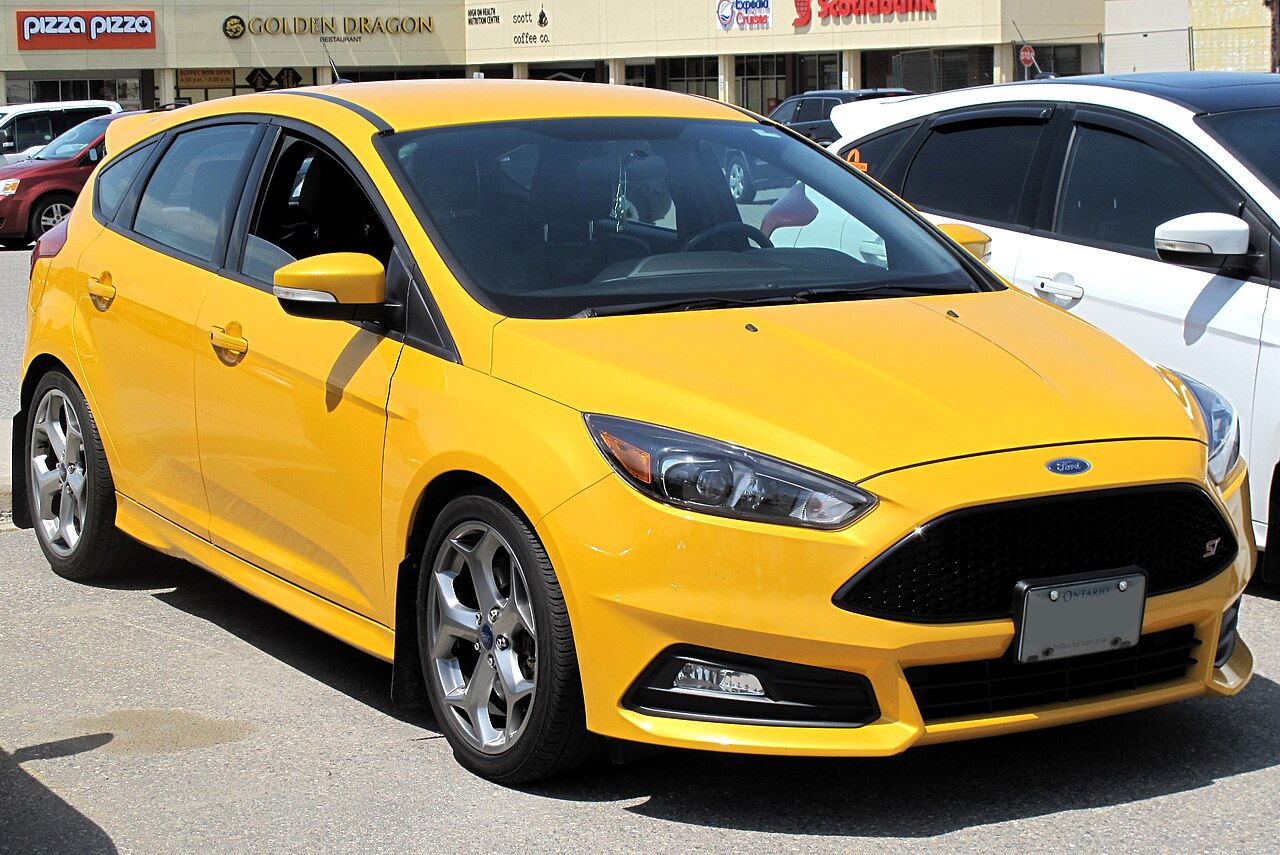
Buying Guide / 2012 - 2018
Ford Focus ST250 Mk3
The EcoBoost revolution hits the ST range. 250bhp from a 2.0-litre turbo four, available as a hatchback or estate, with the factory-backed Mountune MP275 upgrade.
The EcoBoost revolution hits the ST range. 250bhp from a 2.0-litre turbo four, available as a hatchback or estate, with the factory-backed Mountune MP275 upgrade.
The Mk3 Focus ST brought Ford's EcoBoost technology to the ST range. 250bhp from a 2.0-litre turbo four with decent fuel economy and the practical option of an estate body. The Mountune MP275 kit adds 25bhp with full Ford dealer warranty coverage.
The 2.0 EcoBoost is a strong engine but has some well-documented weaknesses that every buyer should understand. We've compiled 8 known issues for the Mk3 ST in our database, including entries for purge valve failure, cracked cylinder head, carbon buildup, water pump pulley seizure and LSPI. Here are the five that matter most.
Go deeper: Run a free Get Car Wise report on a specific Focus ST to see which issues apply to that exact car, plus full MOT history, mileage checks and a personalised buyer checklist.
The evaporative emissions purge valve can fail, causing the engine to stall after refuelling and making the car difficult to restart. Some owners also report hard starting and rough idle. Ford issued a recall for affected vehicles, but not all were captured.
The fix is a replacement purge valve and updated software calibration. The part is inexpensive but the symptoms can be alarming if you are not expecting them.
Ask whether the Ford recall has been completed. Check service records for purge valve replacement. If possible, fill the tank during the test drive and check for stalling or difficult restart. The recall status can be checked with any Ford dealer using the VIN.
The 2.0 EcoBoost uses an integrated exhaust manifold cast into the cylinder head. This design saves weight and improves turbo spool, but the thermal stress can cause the head to crack over time. When it cracks, coolant leaks internally into the combustion chamber or externally down the back of the engine.
Symptoms include unexplained coolant loss, white smoke from the exhaust, and a sweet smell from the engine bay. This is the most expensive common fault on the Mk3 ST and the one that separates a good buy from a bad one.
Check the coolant level is correct and ask the seller about any coolant top-ups. Look for white residue around the oil filler cap. Check the back of the engine for coolant staining. Smell the exhaust for a sweet coolant odour. A pressure test can confirm head integrity if in doubt.
LSPI occurs when the fuel-air mixture ignites before the spark plug fires, caused by extreme cylinder pressures. On the 2.0 EcoBoost, this happens when the driver applies full throttle at low RPM in a high gear. The resulting pressure spike can crack pistons, bend connecting rods, or destroy bearings.
This is a characteristic of all modern turbocharged direct-injection engines, but the 2.0 EcoBoost is particularly susceptible. Using the correct oil specification (API SN Plus or later) significantly reduces the risk. Never floor the throttle below 2,500 RPM in 4th, 5th or 6th gear.
Check service records for the correct oil specification (Ford WSS-M2C948-B or equivalent). Ask about the car's driving history. Listen for any knocking or rattling from the engine under load. A car with full dealer service history using the correct oil is a lower-risk purchase.
The water pump pulley can seize, causing the auxiliary belt to snap or jump. Because the same belt drives the water pump, the engine overheats rapidly after failure. In severe cases, the seized pulley can cause timing belt damage and subsequent valve contact.
The water pump on the 2.0 EcoBoost is driven by the timing belt on some variants, meaning a seized pulley can have catastrophic consequences beyond just overheating.
Listen for squealing or grinding from the auxiliary belt area on cold start. Check the coolant temperature gauge during the test drive for any fluctuations. Ask about water pump replacement history. If the car has over 60,000 miles and no record of water pump work, budget for preventative replacement.
Like all direct-injection engines, the 2.0 EcoBoost is susceptible to carbon buildup on the intake valves. Because fuel is injected directly into the cylinder rather than across the intake valve, there is no fuel washing to keep the valves clean. Carbon deposits accumulate over time, restricting airflow and causing rough idle, misfires and reduced power.
Walnut blasting is the standard cleaning method. Some specialists recommend this as a preventative service every 40,000-60,000 miles on the 2.0 EcoBoost.
During the test drive, check for rough idle, hesitation on acceleration, or any misfires. Ask the seller about walnut blasting or carbon cleaning history. A car with a recent walnut blast is preferable. If the car has over 60,000 miles with no carbon cleaning, budget £300-600 for the service.
The Mk3 Focus ST brought the EcoBoost revolution to the ST range. 250bhp from a 2.0-litre turbo four with good fuel economy and a practical estate option make it a genuinely versatile performance car. The Mountune MP275 kit is factory-backed and adds meaningful power without voiding the warranty.
The cracked cylinder head issue is the big one to check for. It is expensive and relatively common on higher-mileage cars. With clean history, no head issues, correct oil specification and a documented service record, this is a genuinely rapid family car that does everything well.
See current market data, average prices by variant, and get a free valuation for any Ford Focus.
Ford Focus Value Estimate →Enter the registration for MOT history, mileage verification, known faults for that exact variant, and a Get Car Wise Score.
Check a vehicle nowCompiled from independent expert sources, specialist workshops and our database of 8 known Mk3 Focus ST issues. We are not affiliated with any source listed.
Hero image credit: Ford Motor Company press image