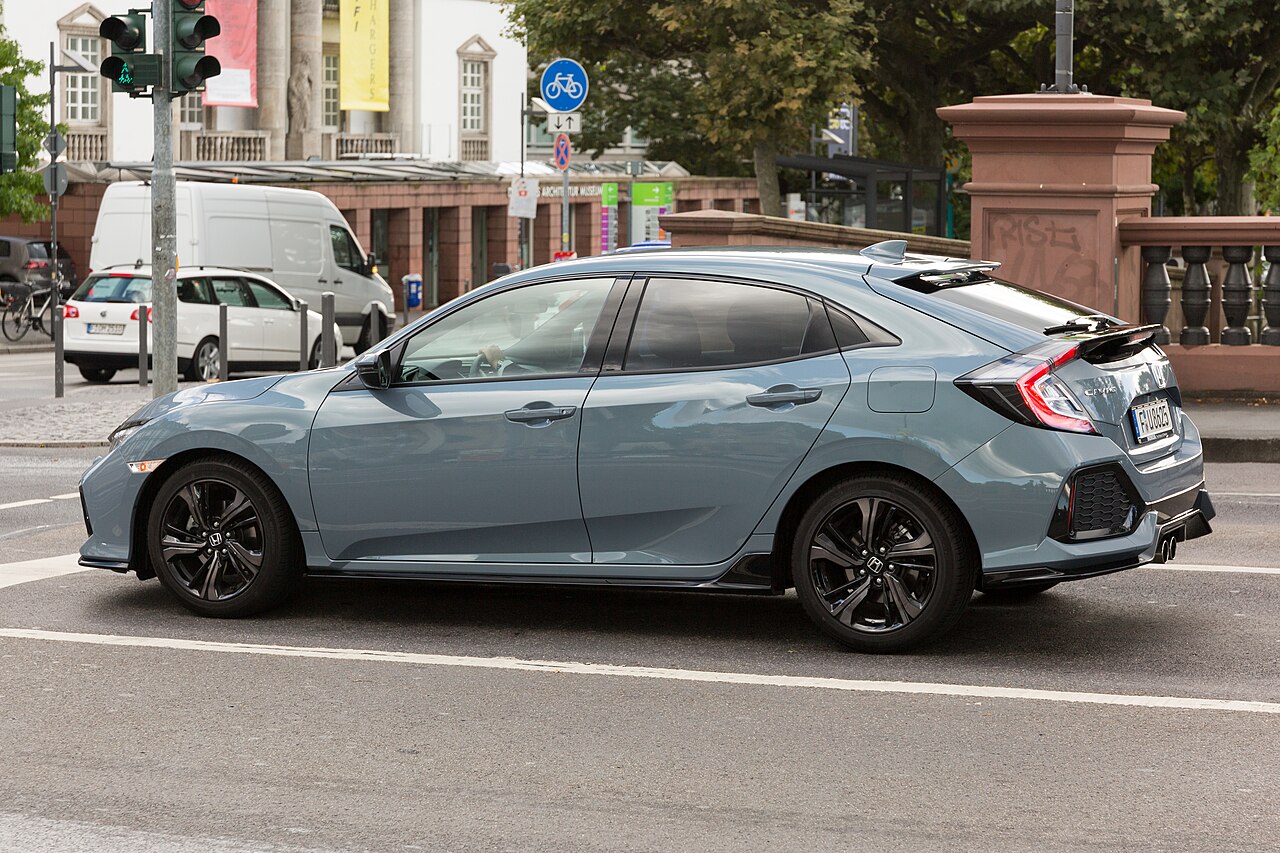
Buying Guide / Mk8 - Mk11
Honda Civic Problems & Buying Guide
A reputation for engineering quality across ten generations. From practical commuters to the Type R hot hatch, the Civic appeals to a wide range of buyers.
A reputation for engineering quality across ten generations. From practical commuters to the Type R hot hatch, the Civic appeals to a wide range of buyers.
The Honda Civic has been a staple of the UK market for decades, with a reputation for low running costs and engineering quality. Used prices start from around £3,000 for older Mk8 models, but newer turbocharged engines bring some issues worth understanding before you buy.
We've compiled 69 known issues for the Honda Civic in our database. Here are the five that matter most, drawn from data by independent sources and owner communities across the UK.
Go deeper: Run a free Get Car Wise report on a specific Civic to see which issues apply to that exact car, plus full MOT history, mileage checks and a personalised buyer checklist.
See every franchised dealer visit, dates, mileage readings, and work done before you buy.
£6.99 · Full refund if no records found
The 1.0-litre VTEC Turbo engine uses a wet timing belt that runs inside the engine, submerged in oil. This is the same design approach used by Ford's 1.0 EcoBoost, which has a well-documented history of belt failures. When the belt snaps, the pistons contact the valves and the engine is destroyed internally.
Honda specifies replacement at approximately 75,000 miles or 6 years. However, some owners have reported belt degradation before these intervals, particularly if oil change schedules have not been maintained. The wet belt is more expensive to replace than a conventional timing belt because it requires partial engine disassembly.
Ask for documented proof of wet belt replacement with dates and mileage. If the belt has not been changed and the car is approaching 60,000 miles or 5 years, factor in the replacement cost. Confirm that oil changes have been carried out on schedule, as contaminated oil may accelerate belt wear.
The 1.5-litre VTEC Turbo engine may suffer from fuel contaminating the engine oil, a problem known as oil dilution. This occurs most frequently on cars used primarily for short journeys and in cold climates, where the engine does not reach full operating temperature often enough to boil off the fuel from the oil.
Diluted oil provides less protection, which may lead to increased engine wear over time. Honda issued a software update for the engine management system on affected models, but the underlying issue is related to driving patterns rather than a single fixable component.
Check the oil dipstick: if the level is above the maximum mark or the oil smells of petrol, this may indicate dilution. Ask about the car's typical use. A 1.5 turbo that has been used mainly for short urban journeys may be at higher risk. Confirm whether the Honda software update has been applied.
The A/C condenser on Mk8 and Mk9 Civics sits in a position that leaves it vulnerable to stone chips and road debris. Once the condenser is punctured, the refrigerant leaks out and the air conditioning stops working. This is a design vulnerability rather than a wear item.
Replacement involves evacuating and recharging the A/C system, which adds to the labour cost. Some owners have fitted aftermarket stone guards to protect the condenser, though this is not a factory solution.
Test the air conditioning during your viewing and confirm it blows cold. Visually inspect the condenser through the front grille for signs of stone damage. If the A/C is not working, factor in the replacement cost. A/C faults may also appear on the MOT advisory history.
The Mk8 Civic uses a two-tier dashboard with a digital LCD display for speed and other key information. These displays may fade, develop dead pixels, or fail entirely with age. The problem is related to the LCD panel degrading over time and is more common on higher-mileage cars.
A failed display does not affect the car mechanically, but it may make key information difficult or impossible to read while driving, which is a safety concern. Aftermarket refurbishment services are available and may be cheaper than a new Honda unit.
Check both dashboard displays carefully in daylight and at night if possible. Look for faded sections, missing pixels, or areas that do not illuminate. Ask if the display has been replaced or refurbished. Factor in the cost of replacement if the display is showing signs of failure.
The Mk8 Civic has a known issue where the immobiliser system draws excessive current when the car is parked, draining the battery over a period of days. Cars that sit unused for a week or more may fail to start. This is a design characteristic of the immobiliser control unit.
Honda did not issue a recall for this issue. Owners have found various workarounds including battery tenders, higher-capacity batteries, or disconnecting the battery when the car is left for extended periods.
Ask the seller how often the car is driven. If it sits for days between uses, ask whether there have been flat battery issues. Check the battery age and condition. A parasitic drain test during a pre-purchase inspection can confirm whether the draw is excessive.
The Honda Civic ranks above the Ford Focus and Vauxhall Astra in most reliability surveys, with annual maintenance costs typically in the £200-300 range. Honda's engineering reputation is earned across decades of production, and the Civic benefits from a large UK owner base and widely available parts.
The Mk8 with a naturally aspirated petrol engine is generally considered the strongest combination for used buyers seeking the lowest maintenance risk. The 1.5-litre turbo has a more established track record than the 1.0-litre turbo, though both require attention to their specific maintenance needs.
For buyers considering a turbocharged model, the wet belt on the 1.0 is the single most important item to verify. On any generation, a thorough independent inspection is recommended before purchase. The Civic's resale values remain strong, and the Type R variants hold their value particularly well.
See current market data, average prices by variant, and get a free valuation for any Honda Civic.
Honda Civic Value Estimate →