Buying Guide / 2009 - 2016
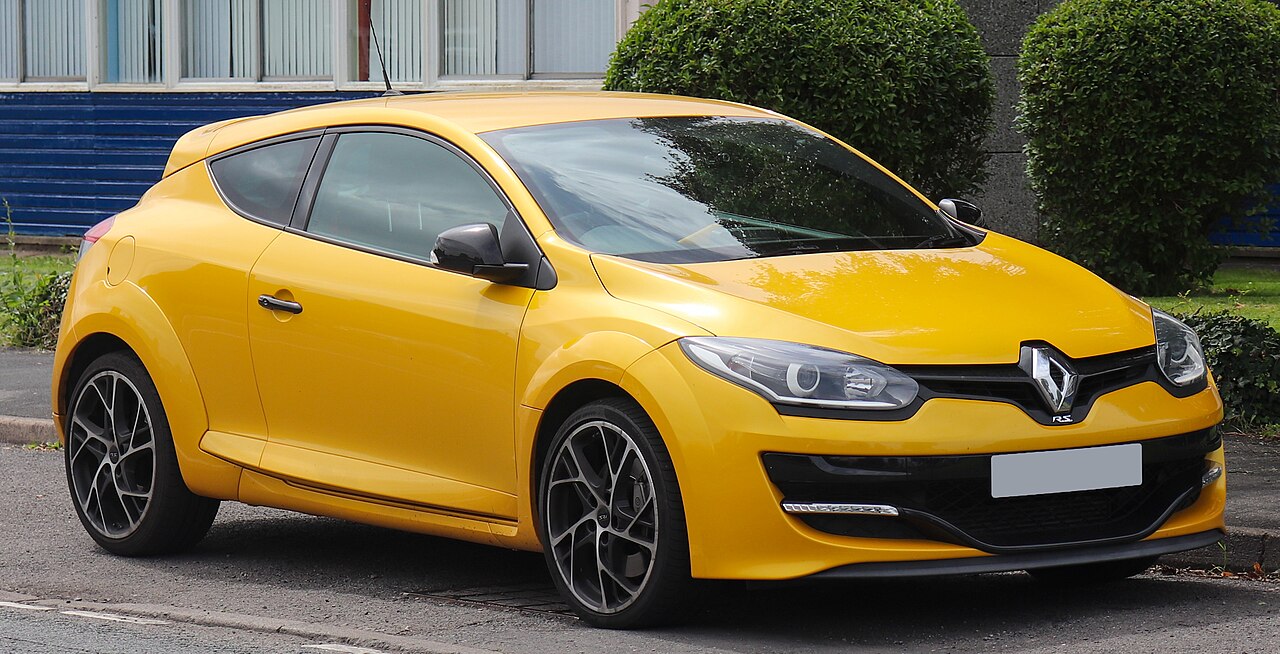
Renault Megane RS 250/265/275
The refined hyper-hatch. Cup chassis with mechanical LSD as standard from 265 onwards. The Trophy-R is one of the greatest front-wheel drive cars ever made.
The refined hyper-hatch. Cup chassis with mechanical LSD as standard from 265 onwards. The Trophy-R is one of the greatest front-wheel drive cars ever made.
The Mk3 Megane RS refined the turbocharged hot hatch formula across three progressively more capable models. The 250 arrived in 2009. The 265 Cup followed in 2011 with a mechanical LSD and Cup chassis as standard. The 275 Trophy (2014) pushed the power further. The 275 Trophy-R (2015), stripped to 1,197kg with Ohlins dampers, is the ultimate expression.
We've compiled 6 known issues for the Megane RS 250/265/275 in our database. Here are the five that matter most, drawn from specialist knowledge and owner communities across the UK.
Go deeper: Run a free Get Car Wise report on a specific Megane RS to see which issues apply to that exact car, plus full MOT history, mileage checks and a personalised buyer checklist.
See every franchised dealer visit, dates, mileage readings, and work done before you buy.
£6.99 · Full refund if no records found
The F4Rt engine uses the same interference timing belt design as all Renault Sport F4R-family engines. If the belt snaps, the engine is destroyed. This applies to every variant from the 250 through to the 275 Trophy-R.
The Mk3 Megane RS benefits from improved ancillaries compared to earlier F4Rt applications, but the fundamental risk remains identical. The belt must be replaced at the correct intervals without exception.
Demand documented proof of timing belt replacement with dates and mileage. If the belt history is unknown or overdue, budget for immediate replacement before driving the car. This is non-negotiable on any F4Rt engine.
The turbo wastegate can develop play over time, causing a rattling noise that is most audible at idle and low RPM. The rattle is caused by the wastegate flap moving in its housing as the internal components wear. It does not necessarily indicate imminent turbo failure, but it does indicate wear that will progress.
In some cases the wastegate actuator can be adjusted or replaced separately. In others, the turbo assembly needs replacing as a unit.
Listen carefully at idle for a metallic rattling from the turbo area. Rev the engine gently and listen for the rattle to change or disappear under boost. A slight rattle may be acceptable, but a loud, persistent rattle suggests significant wear.
The dual-mass flywheel is a wear item that gets expensive when it needs replacing. Symptoms include rattling at idle in neutral, juddering on take-off, and difficulty engaging gears cleanly. Cars that have been used on track or driven aggressively will wear the flywheel faster.
When the clutch needs replacing, the flywheel should be inspected and replaced at the same time if it shows wear. Replacing the clutch alone on a worn flywheel is false economy.
Listen for rattling at idle in neutral. Pull away slowly in second gear and feel for juddering. Check the clutch bite point height. Ask about clutch and flywheel replacement history, especially on cars with track day use.
The steering rack develops play over time, introducing a vague feel on centre and knocking over rough surfaces. On a car defined by its steering precision and chassis communication, any play in the rack significantly diminishes the driving experience.
Rock the steering wheel gently at standstill with the engine running. Any clunking or free play before the wheels respond indicates rack wear. On the test drive, feel for a dead spot on centre. A tight, precise rack is essential on this car.
The rear beam bushes wear over time, causing clunking noises from the rear suspension over bumps and rough surfaces. Worn bushes also affect the car's handling balance, making the rear feel less planted and less predictable through corners.
The fix is relatively straightforward and the parts are not expensive, but it is easy to overlook during a test drive if you are focused on the engine and front suspension.
Drive over speed bumps and rough surfaces and listen for clunking from the rear. On a smooth road, feel for any looseness or unpredictability from the rear axle through corners. Inspect the rear beam bushes visually for cracking or deformation.
The Mk3 Megane RS refined the formula that the 225/R26 started. The Cup chassis with mechanical LSD made it the hot hatch benchmark through the 2010s, and the progressive upgrades from 250 to 265 to 275 kept it at the front of the pack. The 275 Trophy-R, stripped to 1,197kg with Ohlins dampers, is one of the greatest front-wheel drive cars ever made.
Even the base 250 is a serious machine. The turbocharged F4Rt engine is strong and tuneable, and the chassis communicates with a clarity that few rivals can match. The 265 Cup is widely considered the sweet spot: LSD, Cup chassis, and enough power without the Trophy premium.
The timing belt remains the non-negotiable check on any F4Rt engine. Beyond that, the Mk3 Megane RS is a well-sorted, capable and genuinely exciting hot hatch that rewards good maintenance with outstanding driving.
See current market data, average prices by variant, and get a free valuation for any Renault Megane.
Renault Megane Value Estimate →