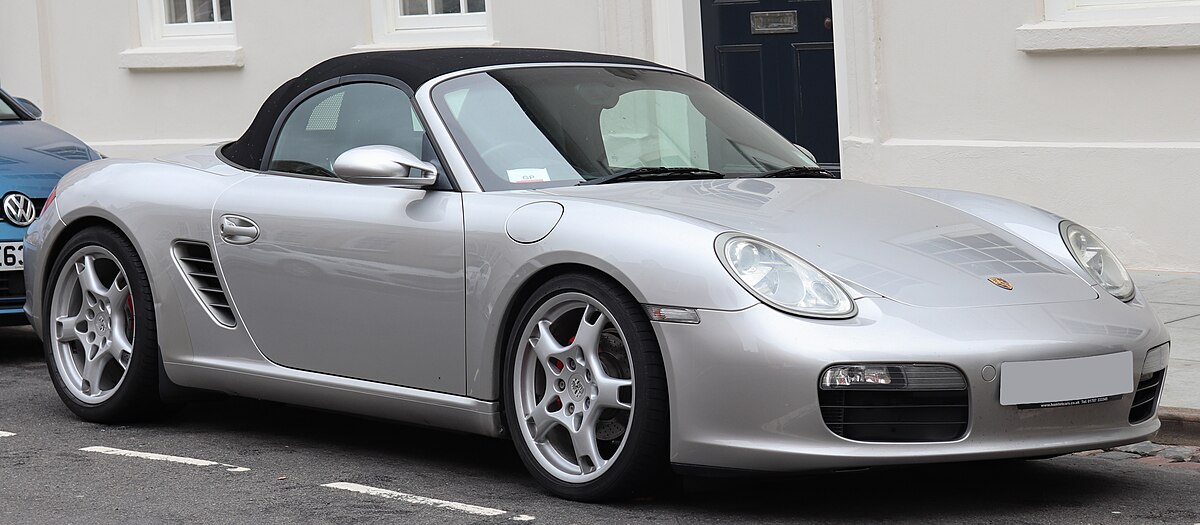
Buying Guide / 2005 - 2012
Porsche 987 Boxster
The 986's sharper successor. More power, better interior, and the post-2009 facelift finally solved the IMS problem. But earlier cars still carry risk.
The 986's sharper successor. More power, better interior, and the post-2009 facelift finally solved the IMS problem. But earlier cars still carry risk.
The 987 refined everything the 986 started. Better looks, better interior, more power. But the early 987.1 (2005-2008) still shares the M97 engine's IMS weakness. The 2009+ facelift changed everything.
Here are the five issues that matter most when buying a 987, drawn from data by Porsche specialists and owner communities across the UK.
Go deeper: Run a free Get Car Wise report on a specific 987 to see which issues apply to that exact car, plus full MOT history, mileage checks and a personalised buyer checklist.
See every franchised dealer visit, dates, mileage readings, and work done before you buy.
£6.99 · Full refund if no records found
The 987.1 still uses the M97 engine with an Intermediate Shaft bearing, though it switched to a dual-row design with a lower failure rate than the 986's single-row. When it fails, the result is the same: metal debris destroys the engine internally with no warning.
The 2009+ facelift models (987.2) received a much more durable plain bearing design. These cars carry significantly lower IMS risk and are widely regarded as having resolved the issue.
On pre-2009 cars, ask for proof of IMS bearing upgrade. The LN Engineering retrofit remains the gold standard. Post-2009 models are much lower risk but a specialist inspection is still recommended before purchase.
The same Nikasil/Lokasil cylinder issue found on the 986 carries over to the 987. The 3.4L S engine is more commonly affected. Cylinder walls develop vertical scoring from inadequate lubrication, leading to compression loss and eventual engine failure.
Symptoms include rising oil consumption, a rhythmic ticking noise from the engine, and black soot on the exhaust tips. Once scoring has started, it cannot be reversed.
A borescope inspection is mandatory before buying any 987. Check exhaust tips for black soot and ask about oil consumption. Oil use above 1 litre per 1,000 miles is a red flag. Bore scoring leads to a full engine rebuild or replacement.
Plastic coolant pipes beneath the intake manifold become brittle with age and crack. When they fail, coolant leaks rapidly and can cause sudden overheating. On the M97 engine, overheating accelerates bore scoring, turning a moderate repair into a catastrophic one.
Ask if the coolant pipes have been replaced with aluminium upgrades. Check coolant level and look for signs of coolant loss or staining around the engine bay. If the original plastic pipes are still fitted, budget for replacement.
The variable valve timing solenoids can fail, causing rough idle, poor throttle response, and check engine lights. The Variocam system adjusts valve timing for optimal performance across the rev range, and when solenoids stick or fail, the engine runs poorly at certain speeds.
This is usually fixable without major engine work. Replacement solenoids and a software reset typically resolve the issue.
Listen for rough idle on cold start. Check for stored fault codes with a Porsche-compatible diagnostic tool. Test throttle response through the rev range and watch for hesitation or flat spots.
The hydraulic roof mechanism uses micro-switches, hydraulic rams and a pump that wear over time. Common symptoms include the roof failing to fully open or close, warning lights on the dashboard, and slow or noisy operation.
Individual micro-switches are relatively cheap to replace, but if the hydraulic pump or rams have failed, costs increase significantly. Neglected mechanisms can leave you stuck with the roof in an intermediate position.
Operate the roof multiple times during the viewing. Listen for grinding or unusually slow movement. Watch for warning lights during operation. Check the rear window for scratches or haze, which indicates the mechanism may be misaligned.
The 987 refined everything the 986 started. Better interior, more power, improved looks. Post-2009 facelift models eliminated the IMS bearing risk entirely. A 2009+ 987.2 with good history is arguably the best-value mid-engine Porsche you can buy.
The 987.1 (2005-2008) still carries IMS risk but at lower rates than the 986, thanks to the dual-row bearing. A documented IMS upgrade on a 987.1 makes it a strong contender too, especially at the lower price point.
Whichever generation you look at, a borescope inspection and specialist service history remain essential. The 3.4 S is the quicker car but carries higher bore scoring risk. Budget for specialist maintenance and get a thorough pre-purchase inspection.
See current market data, average prices by variant, and get a free valuation for any Porsche Boxster.
Porsche Boxster Value Estimate →