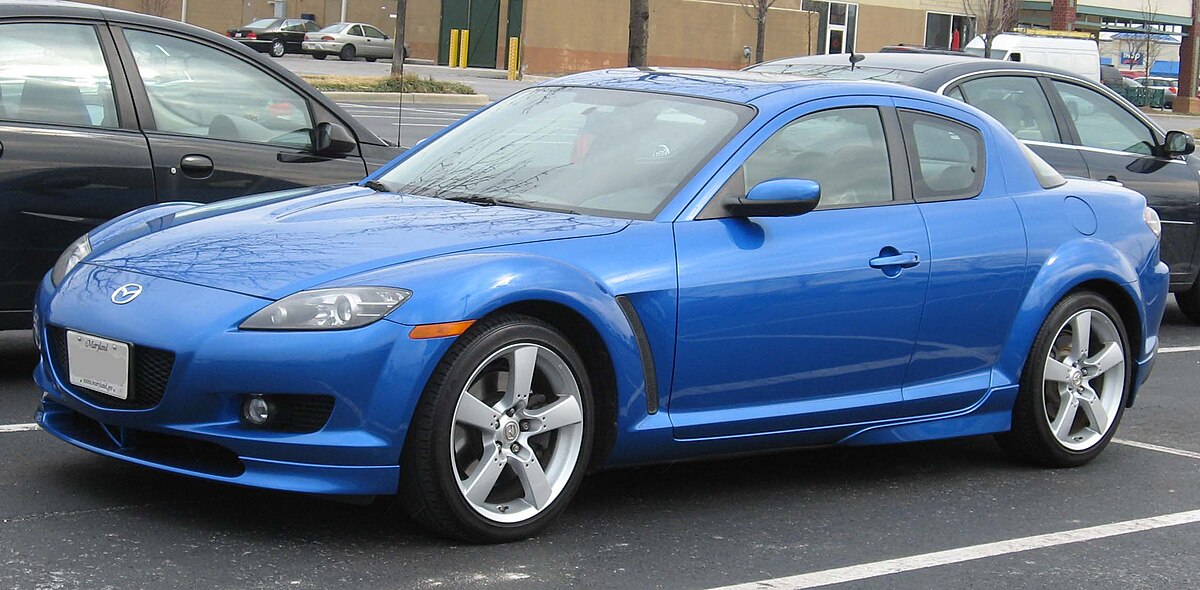
Buying Guide / 2003 - 2012
Mazda RX-8
The last rotary-powered production car. Unique, rev-happy, and deeply misunderstood. The Renesis engine demands knowledge and respect from every owner.
The last rotary-powered production car. Unique, rev-happy, and deeply misunderstood. The Renesis engine demands knowledge and respect from every owner.
The RX-8 is one of the most misunderstood cars on the used market. Prices are low because the rotary engine scares buyers, and that fear is not entirely misplaced. But understood correctly, the Renesis delivers an experience nothing else can.
We've compiled 8 known issues for the RX-8 in our database. Here are the five that matter most, drawn from data by rotary specialists and owner communities across the UK.
Go deeper: Run a free Get Car Wise report on a specific RX-8 to see which issues apply to that exact car, plus full MOT history, mileage checks and a personalised buyer checklist.
See every franchised dealer visit, dates, mileage readings, and work done before you buy.
£6.99 · Full refund if no records found
The rotary engine's apex seals wear over time and are the single most important factor in RX-8 ownership. When compression drops below 6.5 bar in any rotor chamber, the engine will struggle to start (especially hot), lose power, and eventually need a rebuild. This is not a defect - it is the nature of the rotary engine.
A hot compression test is absolutely essential before buying any RX-8. Minimum 7.0 bar across all chambers. Walk away from anything below 6.5.
The rotary engine can flood if switched off before reaching operating temperature. The engine cranks but will not fire. Prevention is simple: never turn off the engine on short journeys. Always let it reach full operating temperature. If flooded, the deflooding procedure involves holding the throttle fully open while cranking for 10+ seconds.
Ask the owner about their daily routine. An RX-8 used for school runs and short trips is a ticking timebomb. The engine needs to reach full operating temperature on every journey.
The rotary engine demands significantly more from its ignition system than a piston engine. Ignition coils and spark plugs should be treated as consumables and replaced at 20,000-mile intervals. Running worn plugs accelerates apex seal wear.
Ask when coils and plugs were last replaced. If unknown, budget for immediate replacement. This is cheap insurance against accelerated engine wear.
The cats run extremely hot on the RX-8 and can fail, causing a blocked exhaust, power loss, and potential overheating. A failing cat can also cause false readings that mask low compression. Some owners fit decat pipes (not road legal).
Check for exhaust restriction. A blocked cat will cause very sluggish performance and high exhaust temperatures. Ensure any compression test is done with a known-good exhaust system.
The rotary engine injects oil into the combustion chambers by design to lubricate the apex seals. This means the RX-8 consumes oil as part of normal operation - typically 1 litre per 1,000-3,000 miles. Running low on oil accelerates apex seal wear dramatically.
Check oil level at every fill-up. The engine must never be run low on oil. Use the correct grade and keep topped up religiously. This is not a fault - it is a requirement of rotary ownership.
The RX-8 is one of the most misunderstood cars on the road. The rotary engine is unique, rev-happy, and sounds incredible. The chassis is brilliantly balanced with near-perfect 50/50 weight distribution and a natural front-mid engine layout. The problems are not problems - they are the requirements of rotary ownership.
Understood and respected, the Renesis engine will deliver an experience nothing else can. Neglected, it will fail. The RX-8 is cheap to buy but demands attention and knowledge. A high-compression example with documented maintenance from a rotary-literate owner is the only one worth buying.